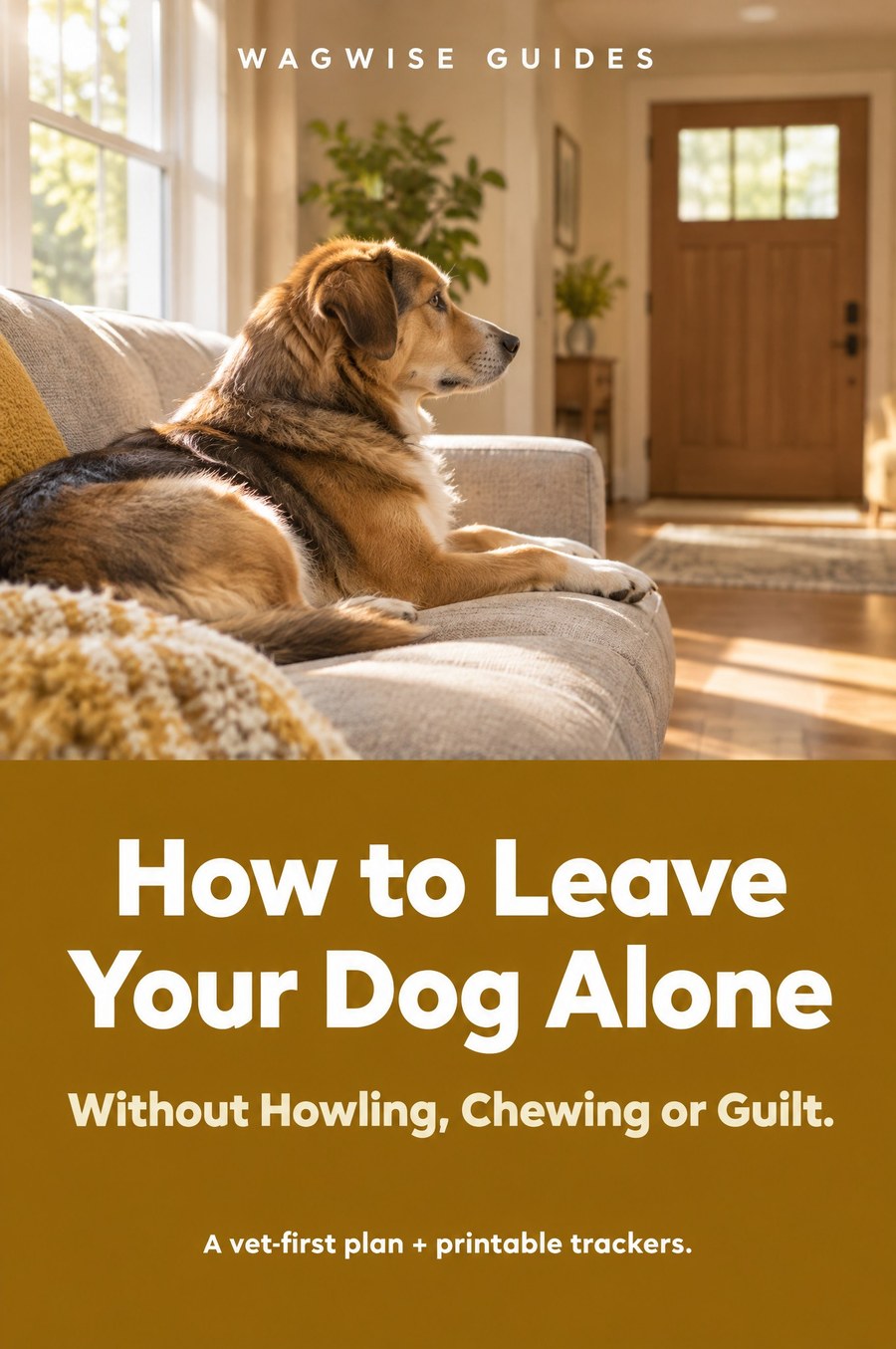
Home alone
A Safe Setup for a Dog Home Alone
Quick answer
A safe room for a dog home alone is a gated room or area with a bed, fresh water and nothing chewable or dangerous. Close the curtains, keep it quiet, and check cables and medicines are out of reach. A gate is usually better than a crate, unless your dog already rests happily in a crate.
- A gated room or corner is usually better than a crate for a dog who is learning to be alone.
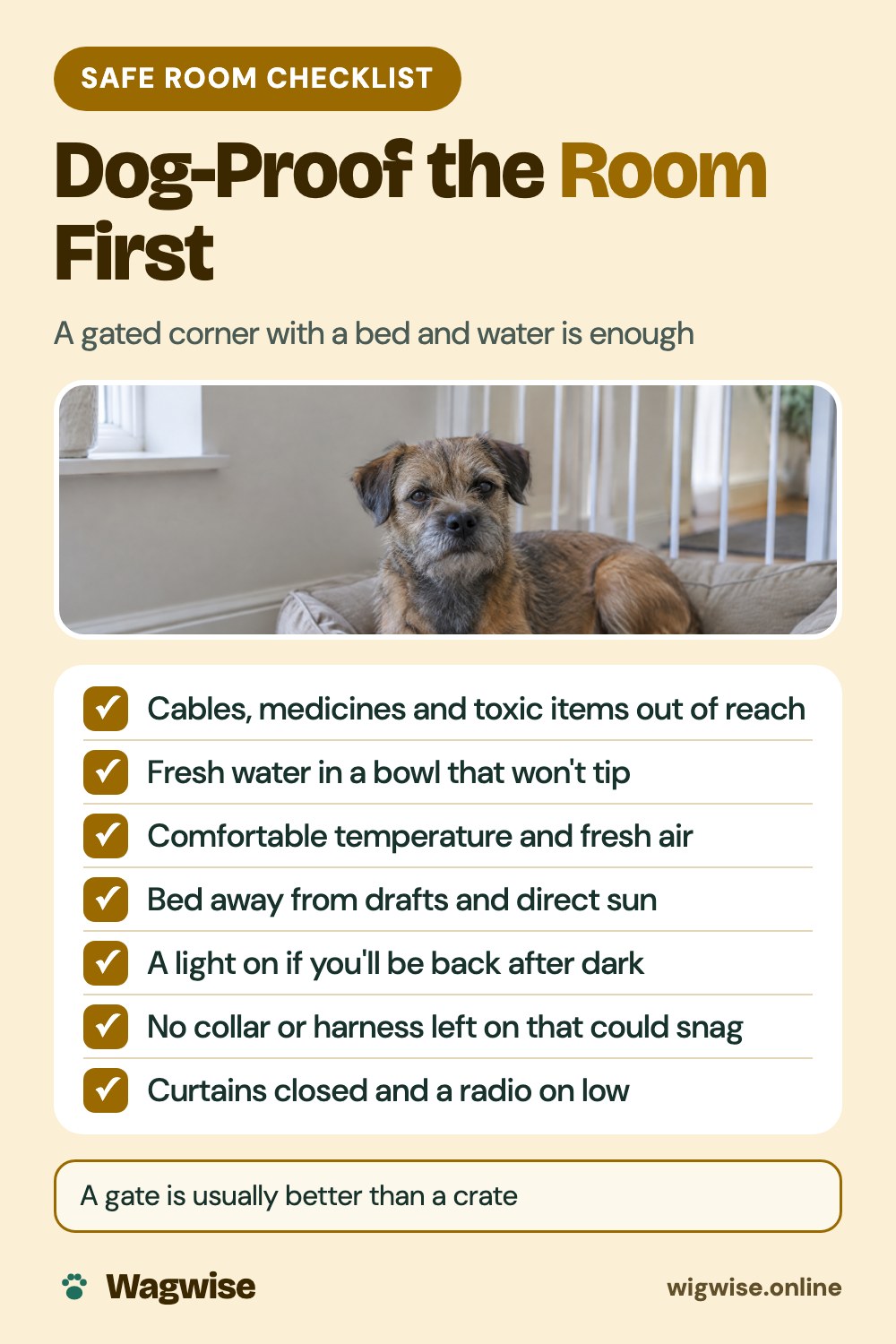
- Walk through a simple checklist: hazards out of reach, water, comfortable temperature, bed, light, nothing that can snag.
- Quiet the triggers with curtains, a quiet room and a radio on low.
- A safe room doesn't fix distress. You still need cover for the hours your dog can't manage yet.
A safe room for a dog home alone is a gated room or area with a comfortable bed, fresh water, and nothing chewable or dangerous. While your dog learns, it shouldn’t be pushed past its limit again and again. A safe space helps, but it works best next to a plan for covering the long hours.
Why a gated room usually beats a crate
A gated room or area is usually better than a crate, unless your dog already rests happily in a crate with the door fixed open. Dogs Trust says crating alone won’t fix separation anxiety and that a panicking dog risks injury. ASPCA says to skip the crate if your dog shows heavy panting, drooling or frantic escape attempts. A review also found crated dogs were no less likely to show problems.
Experts differ here, so ask your vet if you are not sure.
Your safe room for a dog home alone: the checklist
| Check | What to do |
|---|---|
| Hazards | Cables, medicines and anything toxic out of reach |
| Water | Fresh water in a bowl that won’t tip |
| Temperature | Comfortable, with fresh air |
| Bed | Away from drafts and direct sun |
| Light | On, if you’ll be back after dark |
| Snag risk | No collar or harness left on that could snag |
A gated corner with a bed, water and nothing chewable or dangerous is enough. You don’t need special gadgets.
How do you quiet the triggers?
Close the curtains, choose a quiet room, and put a radio on low to muffle outside noise. If you share walls with neighbors, put your dog’s space away from the shared wall if you can.
Then check what is left in the room. If a chew gets destroyed into swallowable pieces, take it away and tell your vet if your dog is a heavy chewer or swallows pieces.
What about puppies?
Puppies need much shorter times alone and more cover than adult dogs, and their needs differ. Treat alone time as practice: very short, very calm, often. If your puppy is struggling, talk to your vet.
What should you check before every outing?
A short routine keeps the setup honest. Before you leave:
- Walk first, so your dog can toilet and stretch.
- Walk through the checklist above and fix one thing if anything looks off.
- Settle your dog in the safe space with a long-lasting chew you’ve checked is safe.
- Check the camera is on and pointed at the spot where your dog rests.
- Leave calmly, with no big goodbye, and with your return time already decided.
If your dog ignores the chew or the bed once you’re out, that is useful information. It can be a sign of worry, not a reason to buy a fancier bed.
Can a safe room fix a dog who is struggling?
No. The room keeps your dog safe, but it doesn’t teach your dog that being alone is okay. If your footage points to distress, you need a vet, a qualified behaviorist and a plan that builds in small steps.
So pair the setup with cover for the long hours. Write down every hour your dog is alone in a normal week. Then decide who covers the long ones while you train: family, a friend or neighbor, a sitter or walker, daycare, a dog-friendly workplace, or days off. If there truly is no cover, shorten the time as much as you can, get professional advice quickly, and talk to your vet.
Read about covering the hours your dog can’t yet be alone and enrichment for the alone window. The Wagwise home alone guide puts the setup, the cover plan and the training steps in one place. It is general education and can’t replace a vet visit.
Frequently asked questions
Should I use a crate or a gated room?
A gated room or area is usually better, unless your dog already rests happily in a crate with the door fixed open. Crating alone doesn't fix separation anxiety, and a panicking dog can hurt itself.
What should I take out of the room?
Cables, medicines and anything toxic or chewable and dangerous. Also take away anything that could snag, and don't leave a collar or harness on that could catch.
Should I leave a light or the radio on?
A light on is useful if you'll be back after dark. A radio on low can muffle outside noise.
Does the setup work for puppies too?
Puppies need much shorter times alone and more cover than adult dogs. Treat alone time as practice: very short, very calm, often.
More Wagwise guides for dog owners
 Stop Puppy BitingA gentle 4-week plan to stop the nipping and get through teething.$17 · instant PDFSee the guide →
 Get Rid of Dog Pee SmellRemove urine odor for good, then stop the accidents with a 14-day reset.$17 · instant PDFSee the guide →
 Stop Dog BarkingA quiz finds why your dog barks, then a plan made for that reason.$17 · instant PDFSee the guide →
 Help Your Itchy DogTrack triggers, soothe skin safely and know when to see the vet.$17 · instant PDFSee the guide →
 House-Train Your PuppyA kind 4-week plan with a schedule by age, a night plan and printable trackers.$17 · instant PDFSee the guide →
 Stop Leash PullingA 4-week force-free plan for calmer walks and a loose leash.$17 · instant PDFSee the guide →
 Puppy Sleeps Through the NightA realistic, age-by-age plan for calmer nights, without cry-it-out or crate fights.$17 · instant PDFSee the guide →
 Less Dog Hair, Less SmellA 4-week brushing, bath and home routine for a calmer-smelling house.$17 · instant PDFSee the guide →
Want all four? Get the complete library for $49.
Sources
This article is general education, not veterinary advice. It does not replace an examination by your vet or help from a qualified behaviourist.