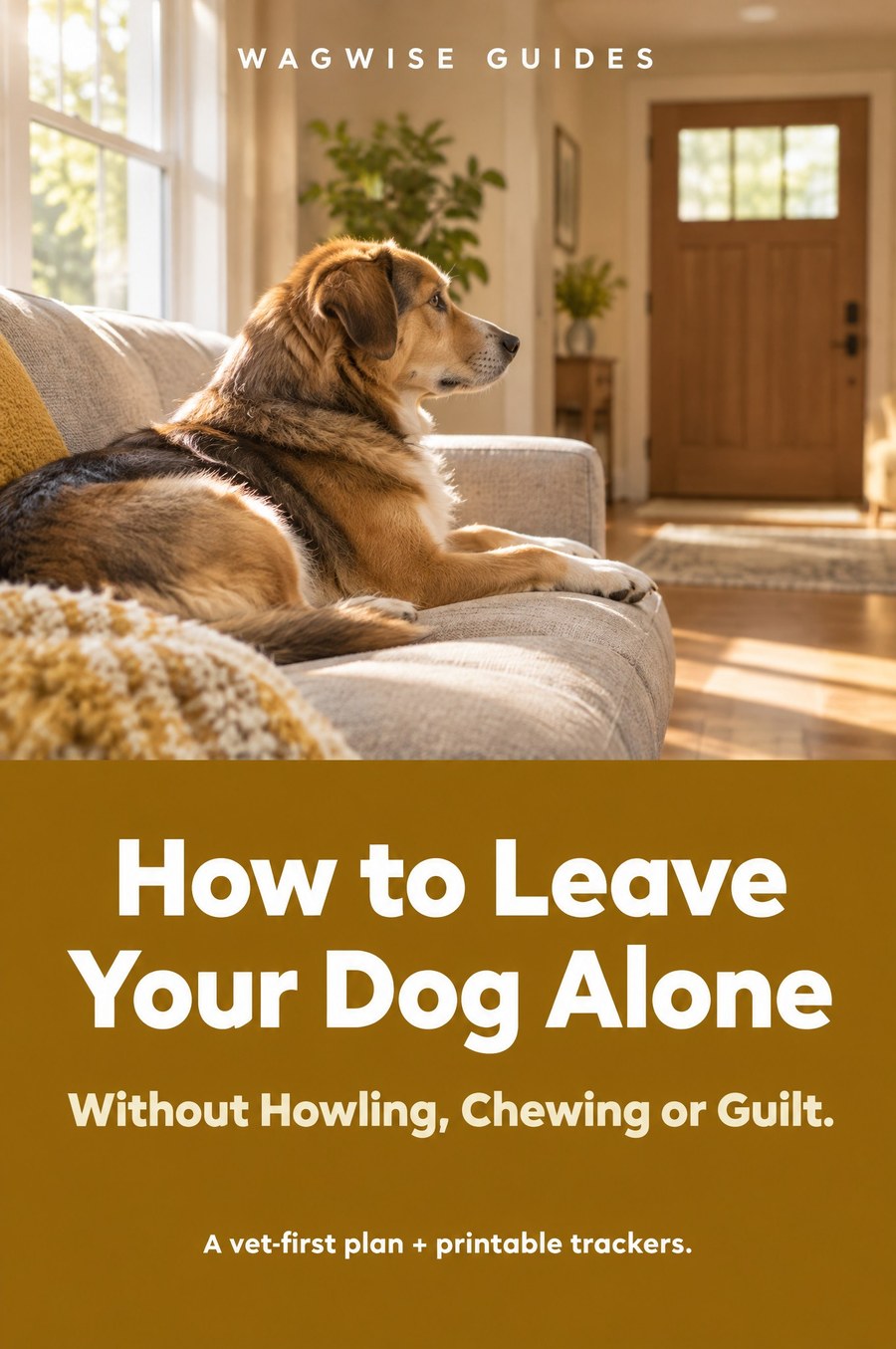
Home alone
Dog Chewing When Left Alone: What It Means
Quick answer
Dog chewing when left alone has more than one possible reason. Damage at doors and windows, or only when you're out, points toward distress. Chewing whatever is in reach, home or away, points toward teenage mischief. Film your dog, see your vet for red flags, and don't punish.
- Where the damage is and whether the chew gets eaten are the best clues.
- Destruction near doors and windows, or only when you're out, points toward distress, not spite.
- Teething usually ends around seven months, but some dogs chew again near their first birthday.
- Self-injury, such as broken teeth or bleeding paws, means call your vet now.
Dog chewing when left alone is one of the most common reasons owners start searching, and the damage alone doesn’t tell you why. A chewed slipper and a chewed door frame can mean very different things. The clues are where the damage is, when it happens, and what the chew looks like on camera.
Dog chewing when left alone: three common reasons
| What you see | What it may point toward |
|---|---|
| Damage at doors, windows and exits, only when you’re out | Distress |
| Random household items, late in a long absence | Boredom |
| Shoes, furniture, anything in reach, home or away | Teen mischief |
Destruction near doors and windows, or only when you’re out, points toward distress, not spite. Dogs don’t plan revenge.
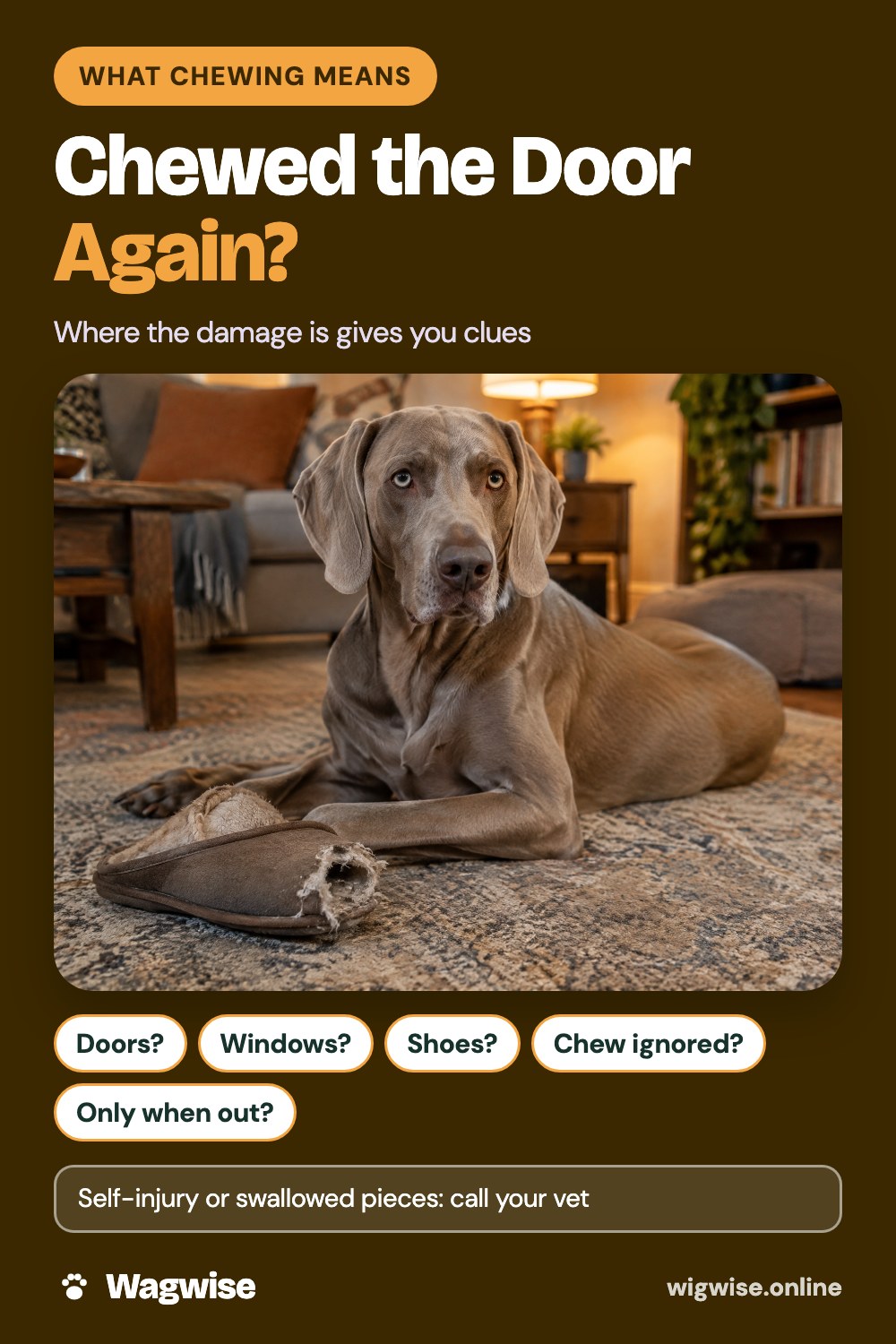
How do you tell them apart?
Film your dog, at least the first 30 minutes. Then look at:
- The chew. A dog who eats or plays only when you’re there may be anxious. A distressed dog often ignores a chew while alone.
- The first minutes. Pacing, whining and drooling at the door suggest distress. Wandering, then settling or sleeping, suggests boredom.
- Toileting. In distress it is often frequent, even in a house-trained dog. In boredom or mischief it is rare.
- Greeting. A frantic, long greeting points toward distress.
A teenage chewer can also be a worried dog, so don’t assume either one. Re-film every two weeks.
What about the teenage chewing phase?
Teething usually ends around seven months, but some dogs have a second chewing phase near their first birthday. The RSPCA says adolescence can run from about 6 to 12 months up to 18 to 24 months, and that fear and anxiety can show up as destructiveness or house soiling in adolescent dogs too.
For adolescent chewers, provide teething and chewing items, keep valuables out of reach, and redirect patiently. Rotate toys every few days so they stay interesting.
What to do about dog chewing when left alone
- Drop the punishment. Scolding teaches nothing, because dogs can’t link it to something done hours earlier.
- Check the red flags. Self-injury, a sudden change, an older dog with new fears, or a bite means vet first.
- Make one room safe. A gated room with a bed, water and nothing chewable or dangerous.
- Add enrichment if the footage looks bored. A sniffy walk before you leave, a safe chew and a nap.
- Cover the long hours. Long absences can make the problem worse.
If your footage points toward distress, enrichment is a kind extra, not the plan. Take the footage to your vet and ask for a referral to a qualified behaviorist.
When is chewing a safety issue?
Tell your vet if your dog is a heavy chewer or swallows pieces, and take away anything that gets destroyed into swallowable pieces. Self-injury, like broken teeth or bleeding paws from scraping at doors, means calling your vet now. Skip the crate if your dog shows frantic escape attempts, heavy panting or drooling, because a panicking dog can hurt itself.
Read how to sort distress, boredom, mischief and house-training, and find enrichment ideas. The Wagwise home alone guide puts the sorter and the plan in one place. It is general education and can’t replace an exam.
Frequently asked questions
Why does my dog chew the door frame when I leave?
Damage at doors, windows and exits points toward distress, especially if it only happens when you're out. Film your dog and talk to your vet.
Is my teenage dog chewing out of boredom?
It might be. Teething usually ends around seven months, but some dogs have a second chewing phase near their first birthday. The RSPCA says adolescence can run from about 6 to 12 months up to 18 to 24 months.
Should I scold my dog for chewing?
No. Dogs can't link a telling-off to something done hours earlier, and punishing can add anxiety and confusion.
How can I tell boredom from distress?
Look at the footage. A bored dog tends to settle or sleep, eats the chew, then looks for more to do. A distressed dog tends to pace, whine and ignore the chew.
More Wagwise guides for dog owners
 Stop Puppy BitingA gentle 4-week plan to stop the nipping and get through teething.$17 · instant PDFSee the guide →
 Get Rid of Dog Pee SmellRemove urine odor for good, then stop the accidents with a 14-day reset.$17 · instant PDFSee the guide →
 Stop Dog BarkingA quiz finds why your dog barks, then a plan made for that reason.$17 · instant PDFSee the guide →
 Help Your Itchy DogTrack triggers, soothe skin safely and know when to see the vet.$17 · instant PDFSee the guide →
 House-Train Your PuppyA kind 4-week plan with a schedule by age, a night plan and printable trackers.$17 · instant PDFSee the guide →
 Stop Leash PullingA 4-week force-free plan for calmer walks and a loose leash.$17 · instant PDFSee the guide →
 Puppy Sleeps Through the NightA realistic, age-by-age plan for calmer nights, without cry-it-out or crate fights.$17 · instant PDFSee the guide →
 Less Dog Hair, Less SmellA 4-week brushing, bath and home routine for a calmer-smelling house.$17 · instant PDFSee the guide →
Want all four? Get the complete library for $49.
Sources
This article is general education, not veterinary advice. It does not replace an examination by your vet or help from a qualified behaviourist.