Home alone
Printable: Film Sheet and Ladder Log
Quick answer
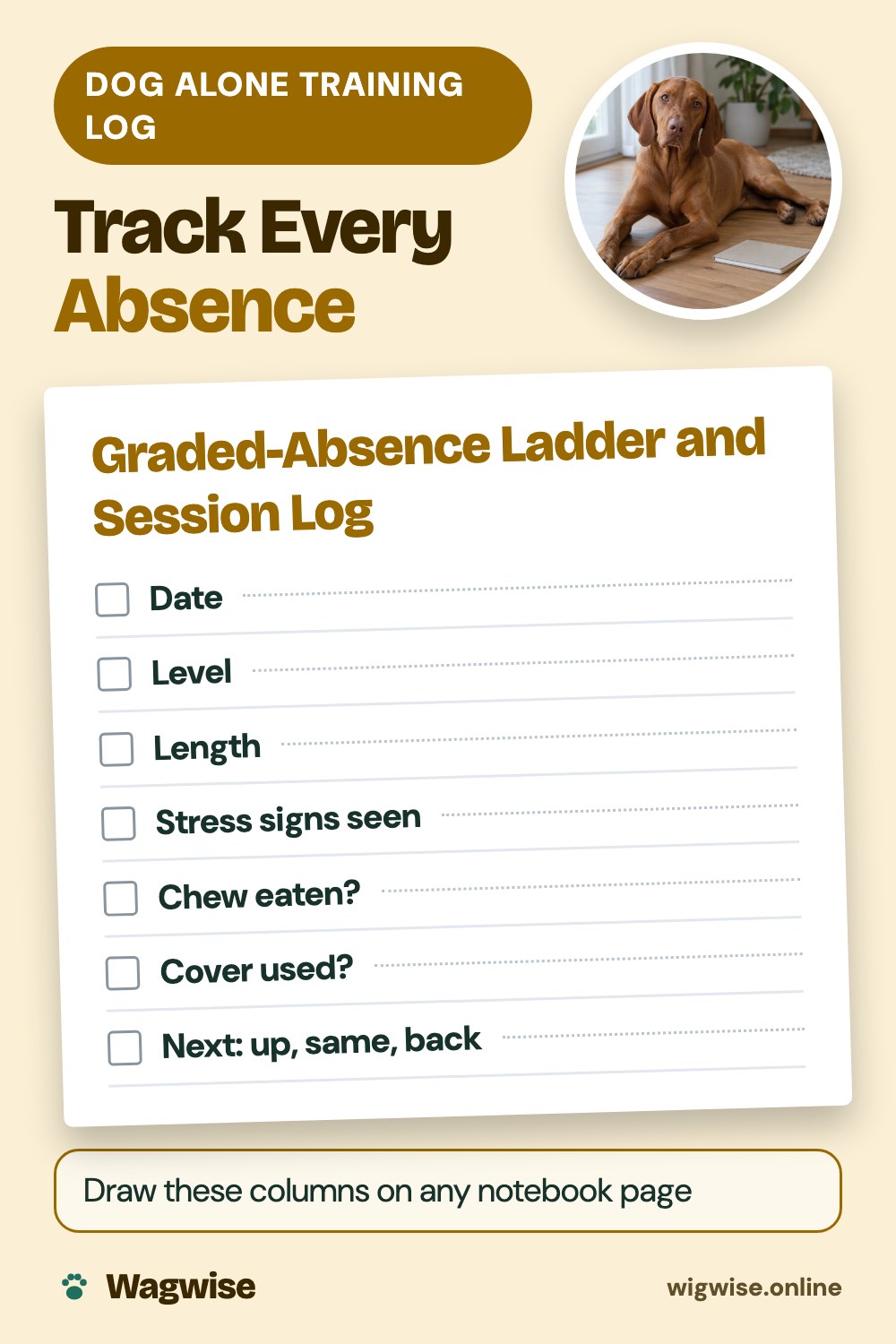
A dog alone training log records each practice so you can spot patterns and show your vet. Track the date, level, length, stress signs, whether the chew was eaten, whether cover was used, and your next step. Pair it with a film sheet for the first 30 to 60 minutes and a vet visit sheet.
- Four sheets cover most of what you need: a film observation sheet, a vet and behaviorist visit sheet, a ladder and session log, and a cover plan.
- The film sheet notes the minute of the first sign, the worst moment and when your dog settled.
- The session log records level, length, stress signs, chew eaten, cover used and your next step: up, same or back.
- Bring your log and best clips to every vet or behaviorist visit.
A dog alone training log is a simple sheet where you write down each practice. It sounds dull, and that is the point. Boring notes show you patterns you’d miss from memory, and they give your vet and behaviorist something real to work with.
What goes on a film observation sheet?
Use one sheet per filmed session. Watch the first 30 to 60 minutes of video and note what you see.
| Column | What to write |
|---|---|
| Minute | 0 (you leave), 2, 5, 10, 15, 20, 25, 30, 40, 50, 60 |
| Body | Panting, pacing, drooling, trembling, resting |
| Voice | Bark, howl, whine, quiet |
| Doors and windows | Scratching, chewing, watching |
| Chew eaten? | Yes, no or sometimes |
At the bottom, note the minute of the first sign, the minute of the worst moment, and when your dog settled or fell asleep. Add whether your dog eats or plays when you’re out, and whether the same behavior happens when you’re home. Keep a short clip of the worst moment for your vet.
What goes in a dog alone training log?
Draw these columns for each practice: date, level, length, stress signs seen, chew eaten, cover used, and next step (up, same or back).
Then use the same rules every time:
- Any stress sign? Make the next absence shorter.
- Two stress signs in a row? Go back two levels and stop for the day.
- Calm for 2 to 3 sessions? You can climb one level.
Stress signs include yawning, panting, drooling, trembling, pacing, vocalizing and ignoring the chew. At the bottom of the week, count your sessions and how many were calm. Stuck for two weeks? Call your professional.
What about the vet and behaviorist visit sheet?
Fill this in before the appointment:
- When it started, and what changed around then (a move, work, family, health).
- The signs you’ve noticed, and about which minute the first sign appears.
- What you’re bringing: videos, film sheets, your session log, and a list of food, treats and medicines.
- Who is on your care team, and the hours alone in a normal week.
- Your questions, including about medication, as a vet’s decision.
Never start, stop or change a medicine without your vet.
And a cover plan sheet?
A week grid with the hours alone each day, who covers, when, and your practice slots. At the bottom, add up total hours alone, hours covered and hours still uncovered. Call your vet or behaviorist about those uncovered hours. Write a bad-day version too: one short practice a level or two down, extra cover and a good walk.
How often should you review the log?
Look at it once a week. Count the sessions and how many were calm, and pick the level for next week. If you can’t get past the door-step after two weeks, or your dog’s distress worries you, take the log and videos to your professional.
It also helps to add a short line about what changed that week, such as a noise, a visitor or a new routine. Setbacks often have a cause, and the log is where you spot it.
Why bother with paperwork?
Because a plan that lives in your head quietly drifts toward “just a little longer”. A log keeps practice below your dog’s stress point and tells you when to ask for more help.
For the weekly structure, see a 4-week plan, and for filming tips, what to look for on video. The Wagwise home alone guide includes print-ready versions of all four sheets. It is general education, not diagnosis.
Frequently asked questions
What should a film observation sheet include?
Minute-by-minute notes for the first 30 to 60 minutes: body (panting, pacing, drooling, trembling, resting), voice, doors and windows, and whether the chew was eaten. Add the first sign minute, the worst moment and when your dog settled.
What goes in a session log?
Date, level, length, stress signs seen, chew eaten, cover used, and your next step: up, same or back.
How do I decide up, same or back?
Go up after 2 to 3 calm sessions. One stress sign means a shorter next absence. Two in a row means go back two levels and stop for the day.
Where can I get the printable versions?
The Wagwise home alone guide includes print-ready versions of the film sheet, vet visit sheet, ladder log and cover plan. You can also draw the same columns on any notebook page.
More Wagwise guides for dog owners
 Stop Puppy BitingA gentle 4-week plan to stop the nipping and get through teething.$17 · instant PDFSee the guide →
 Get Rid of Dog Pee SmellRemove urine odor for good, then stop the accidents with a 14-day reset.$17 · instant PDFSee the guide →
 Stop Dog BarkingA quiz finds why your dog barks, then a plan made for that reason.$17 · instant PDFSee the guide →
 Help Your Itchy DogTrack triggers, soothe skin safely and know when to see the vet.$17 · instant PDFSee the guide →
 House-Train Your PuppyA kind 4-week plan with a schedule by age, a night plan and printable trackers.$17 · instant PDFSee the guide →
 Stop Leash PullingA 4-week force-free plan for calmer walks and a loose leash.$17 · instant PDFSee the guide →
 Puppy Sleeps Through the NightA realistic, age-by-age plan for calmer nights, without cry-it-out or crate fights.$17 · instant PDFSee the guide →
 Less Dog Hair, Less SmellA 4-week brushing, bath and home routine for a calmer-smelling house.$17 · instant PDFSee the guide →
Want all four? Get the complete library for $49.
Sources
This article is general education, not veterinary advice. It does not replace an examination by your vet or help from a qualified behaviourist.